
Maritime Insights
Maritime risk, translated into commercial exposure.
Analysis of commercial shipping, maritime security, energy flows, insurance exposure, ports, chokepoints and operational maritime risk.
View Maritime InsightsLonger-form Optarus analysis examining the maritime, regional and humanitarian developments shaping commercial exposure and operating conditions. These free publications demonstrate the analytical approach used in separately scoped commissioned assessments.
Analysis of commercial shipping, maritime security, energy flows, insurance exposure, ports, chokepoints and operational maritime risk.
View Maritime InsightsAnalysis of geopolitical, security, commercial and strategic developments affecting the operating environment.
View Regional InsightsIndependent analysis of displacement, access constraints, logistics networks, reception pressure and essential infrastructure.
View Humanitarian InsightsFree public analysis. Newest publications appear first.
Capability, opportunity and resilience across the Gulf–Red Sea digital corridor
Iran’s threats constitute a credible coercive signal, but a specialised capability to conduct coordinated attacks against subsea cables has not been independently established. Network redundancy limits the prospect of a global shutdown, while regional and commercial disruption could still be significant.
Free to read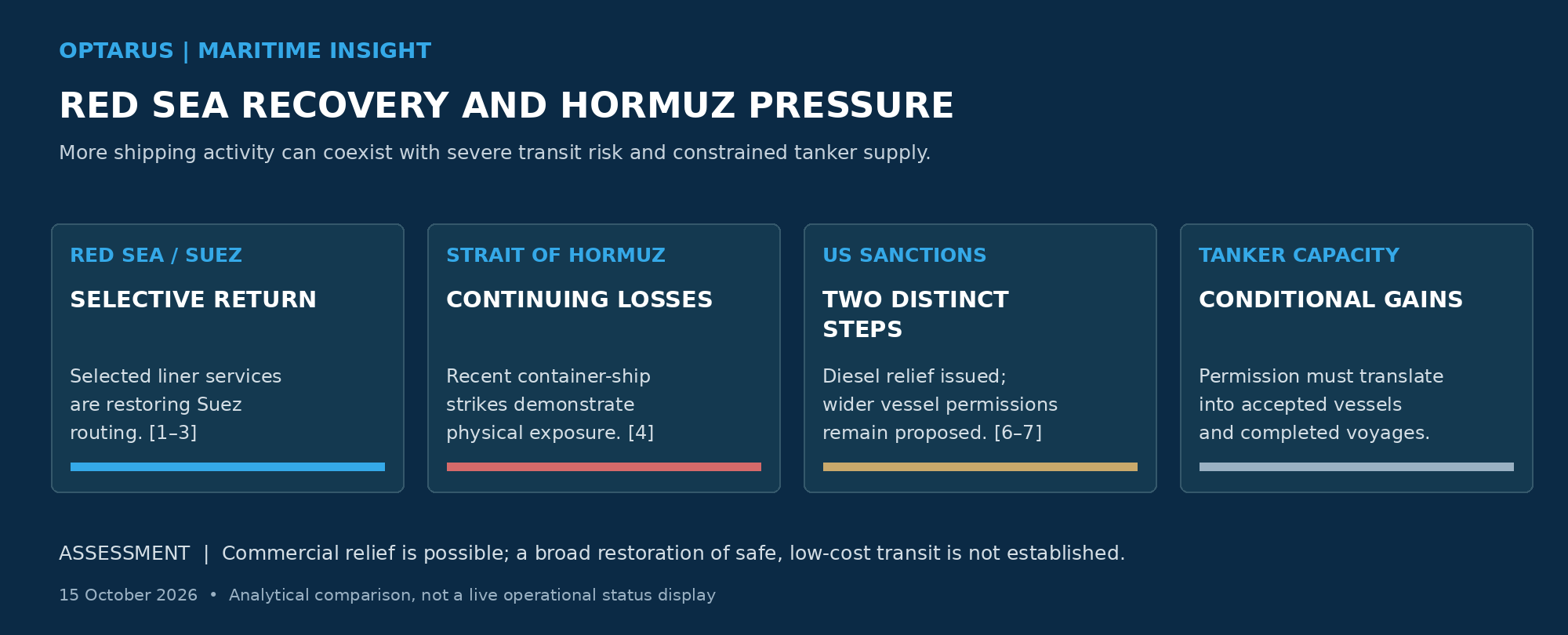
How sanctions relief could change tanker availability without removing transit risk
Selected container services are returning to Suez while recent vessel losses in the Strait of Hormuz demonstrate that cargo movement and vessel safety remain separate questions. Prospective US permissions for sanctioned tankers could ease some capacity pressure, but only where vessels prove legally, technically and commercially acceptable.
Free to read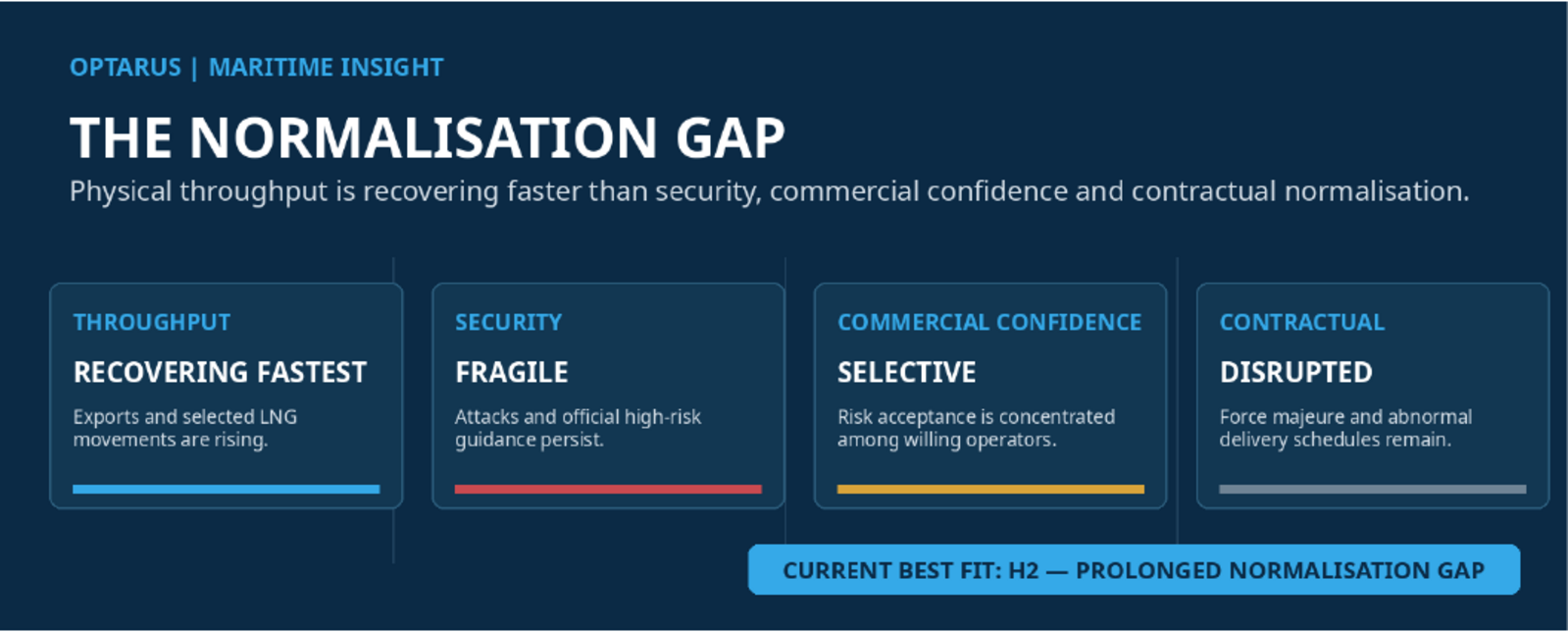
Three Paths for Shipping After Hormuz
Gulf energy throughput is recovering faster than maritime security and commercial confidence. Optarus assesses three pathways for shipping as U.S.–Iran negotiations continue and industry adapts around persistent Hormuz risk.
Complimentary public assessment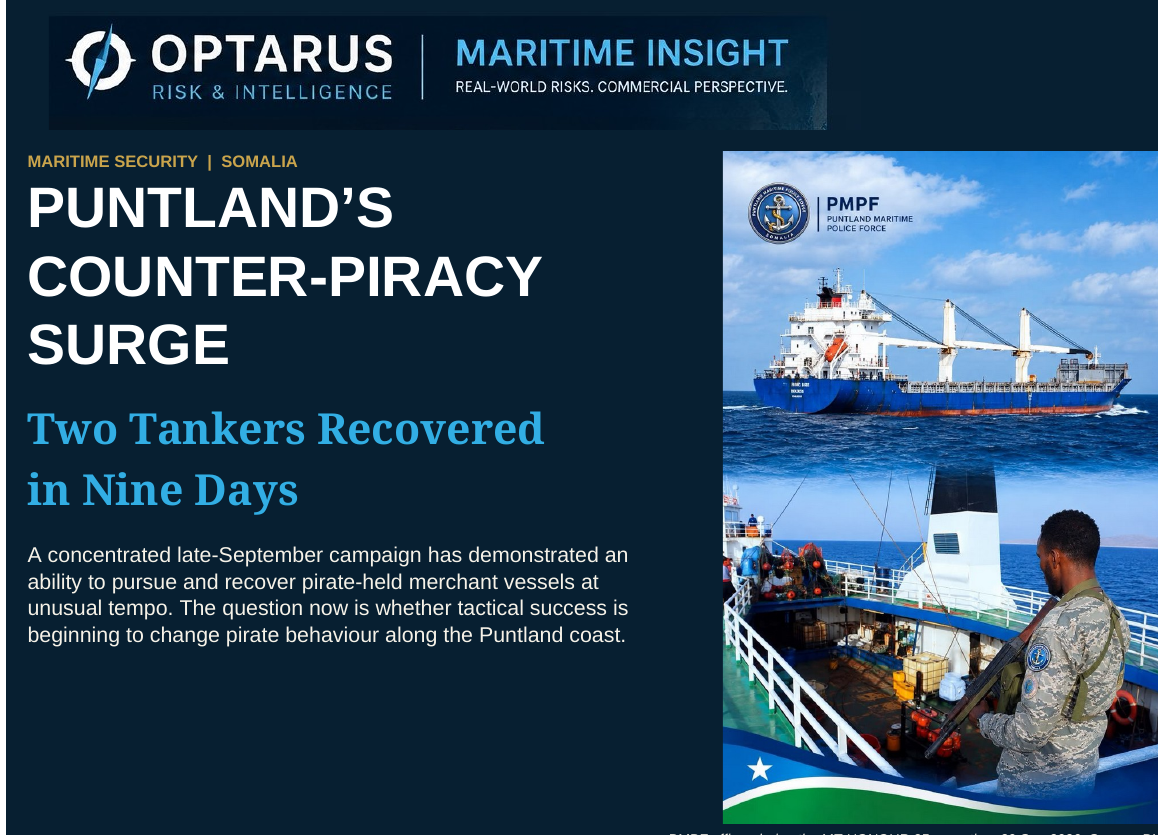
Two Tankers Recovered in Nine Days
Two pirate-held vessels recovered in nine days point to increased tactical effectiveness and operational tempo by Puntland security forces. Whether that pressure is beginning to change pirate behaviour remains unproven.
Free to read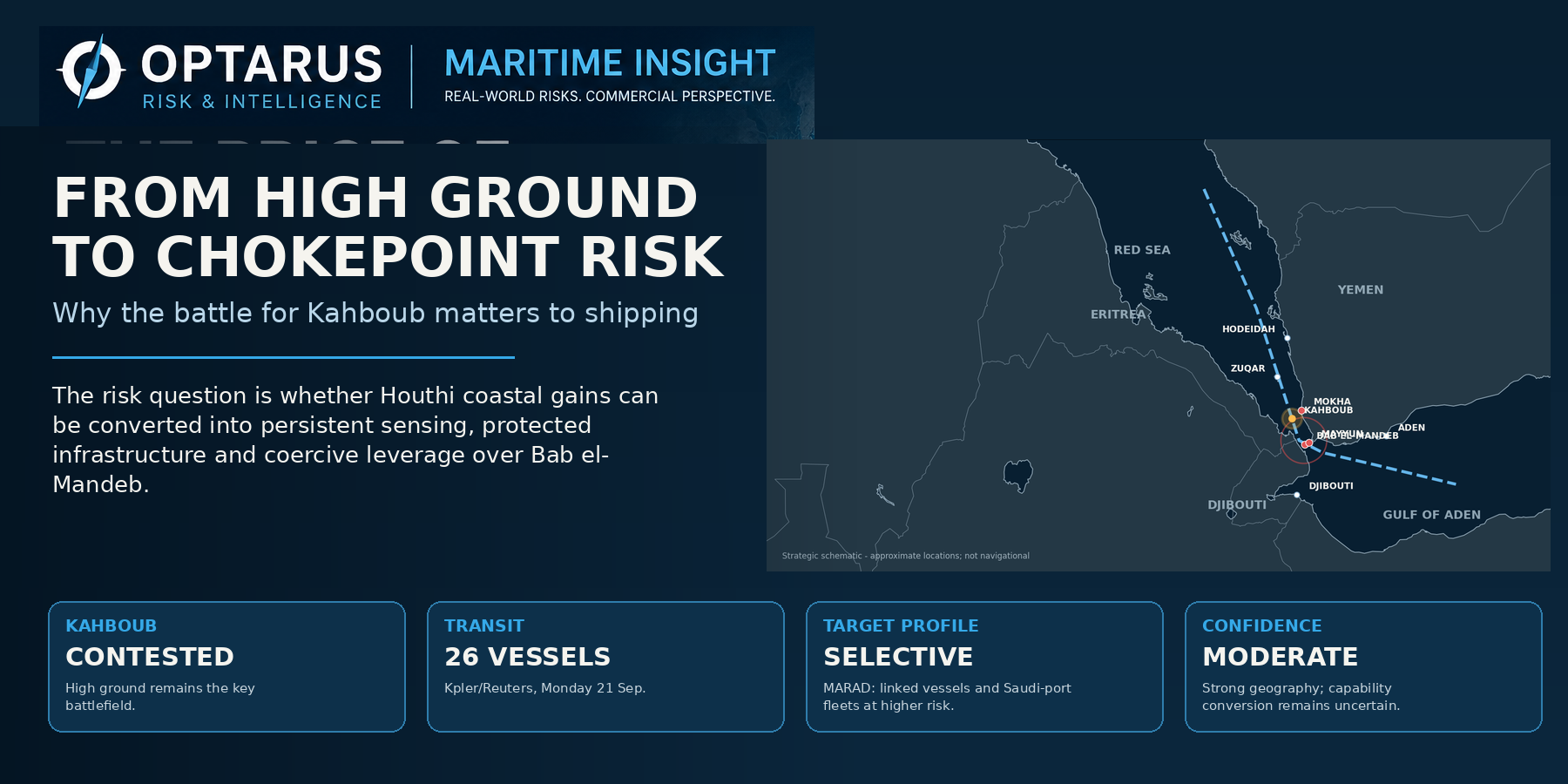
Why the Battle for Kahboub Matters to Shipping
Kahboub is not yet a shipping-disruption event, but control of the high ground could make an established selective maritime threat more persistent, survivable and coercive.
Free to read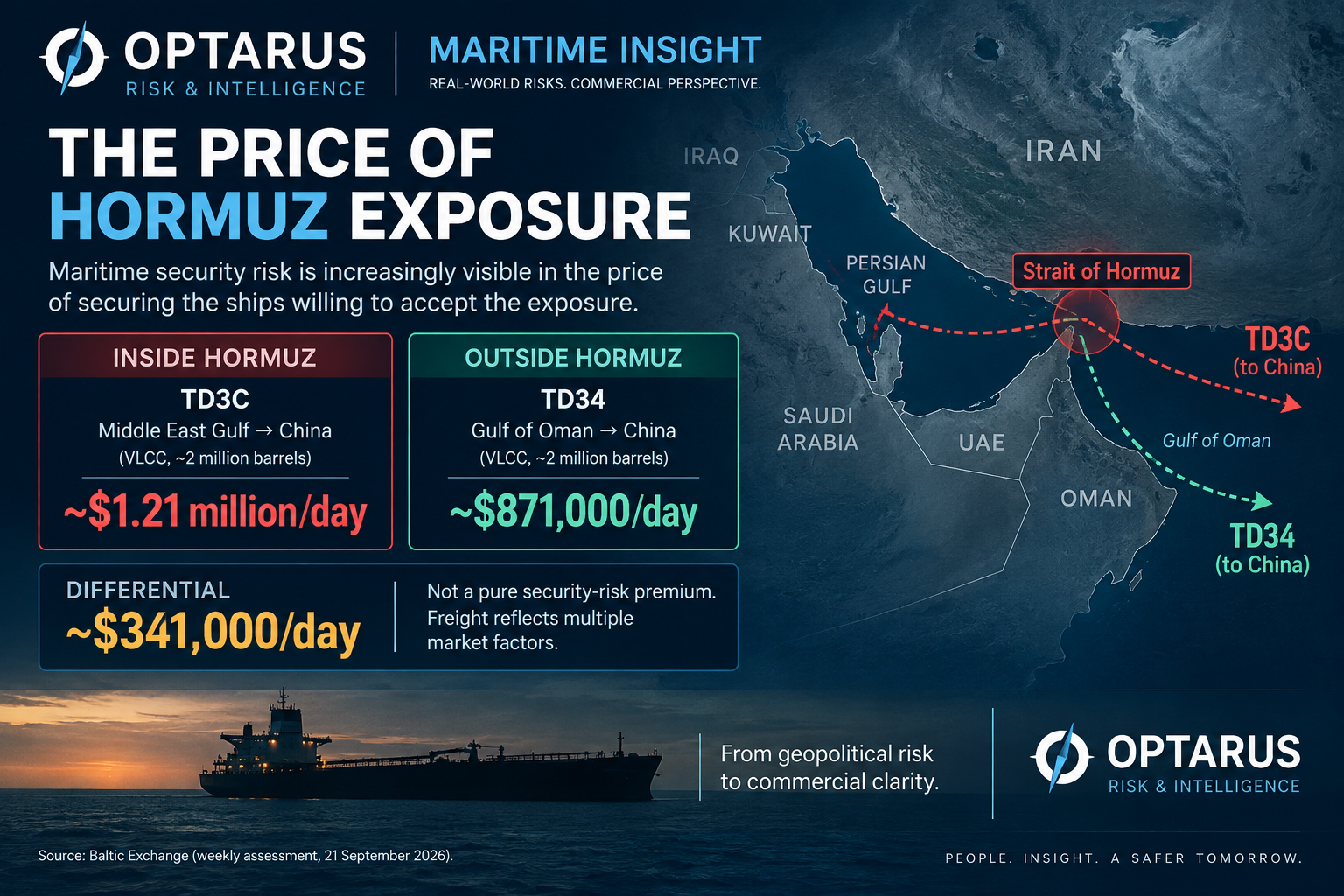
How the Gulf of Oman ship-to-ship transfer system is keeping oil moving — and creating new risk
Physical oil flows are being preserved through shuttle movements and ship-to-ship transfers, but the workaround consumes vessel capacity and shifts exposure into additional transfer, scheduling, insurance and contractual layers.
Free to readAnalysis of geopolitical, security, commercial and strategic developments affecting the operating environment.
Retaliation pathways, infrastructure exposure and the economic consequences for regional commerce.
A renewed US strike on Iran remains a credible but unconfirmed contingency. The wider commercial risk arises from sustained disruption to energy, shipping, aviation, infrastructure and regional business operations.
Free to read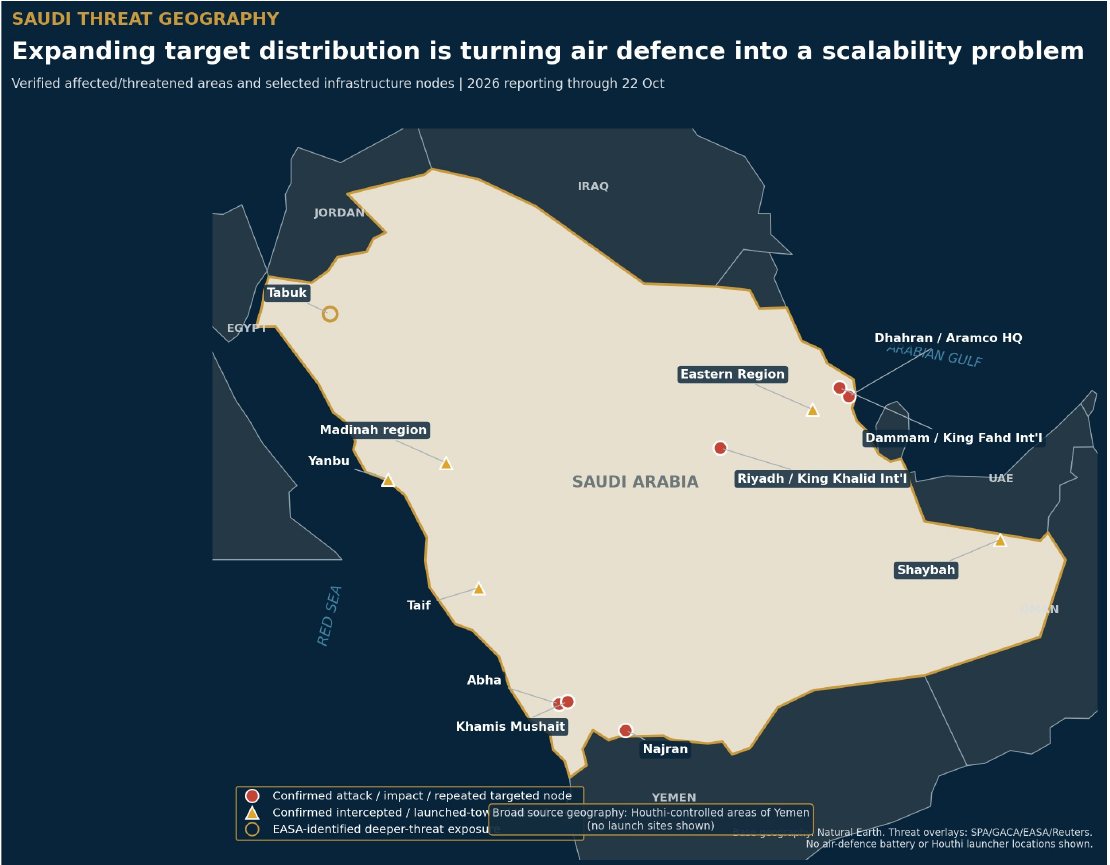
Why expanding Houthi strike geography is testing point defence, interceptor depth and the launch cycle
Saudi Arabia is successfully intercepting significant numbers of Houthi missiles and drones, but the expanding geographic distribution of attacks is creating a different problem: how to protect an increasingly dispersed set of aviation, energy, urban, military and logistics assets with finite defensive systems and interceptor inventories.
Free to read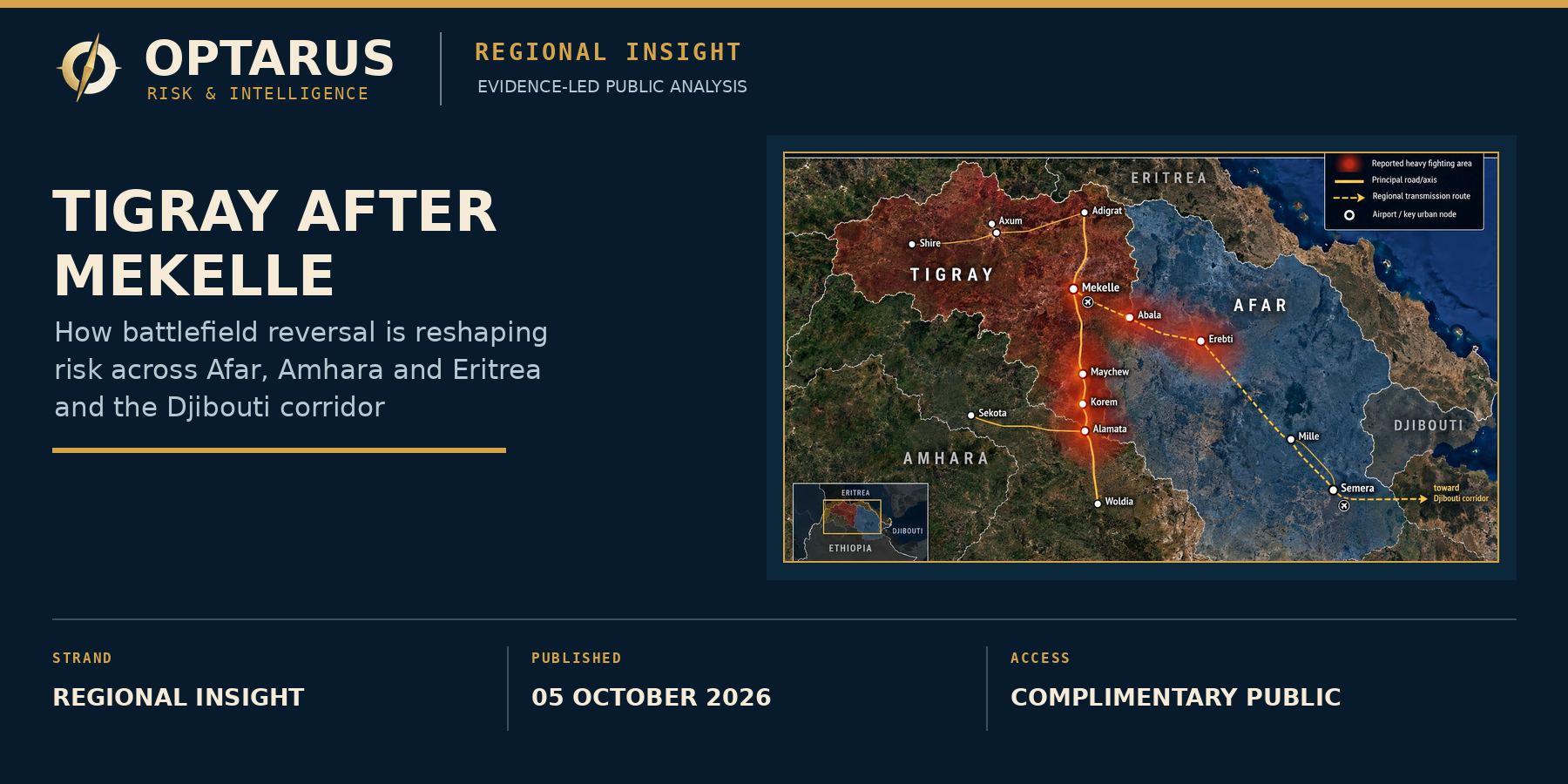
How battlefield reversal is reshaping risk across Afar, Amhara, Eritrea and the Djibouti corridor
Federal and allied forces have retaken Mekelle, but the northern Ethiopia conflict is not necessarily closing. Optarus assesses how the battlefield reversal is reshaping risk across Tigray, Afar, Amhara and the Eritrea border, and what that means for humanitarian access and the Ethiopia–Djibouti trade corridor.
Free to read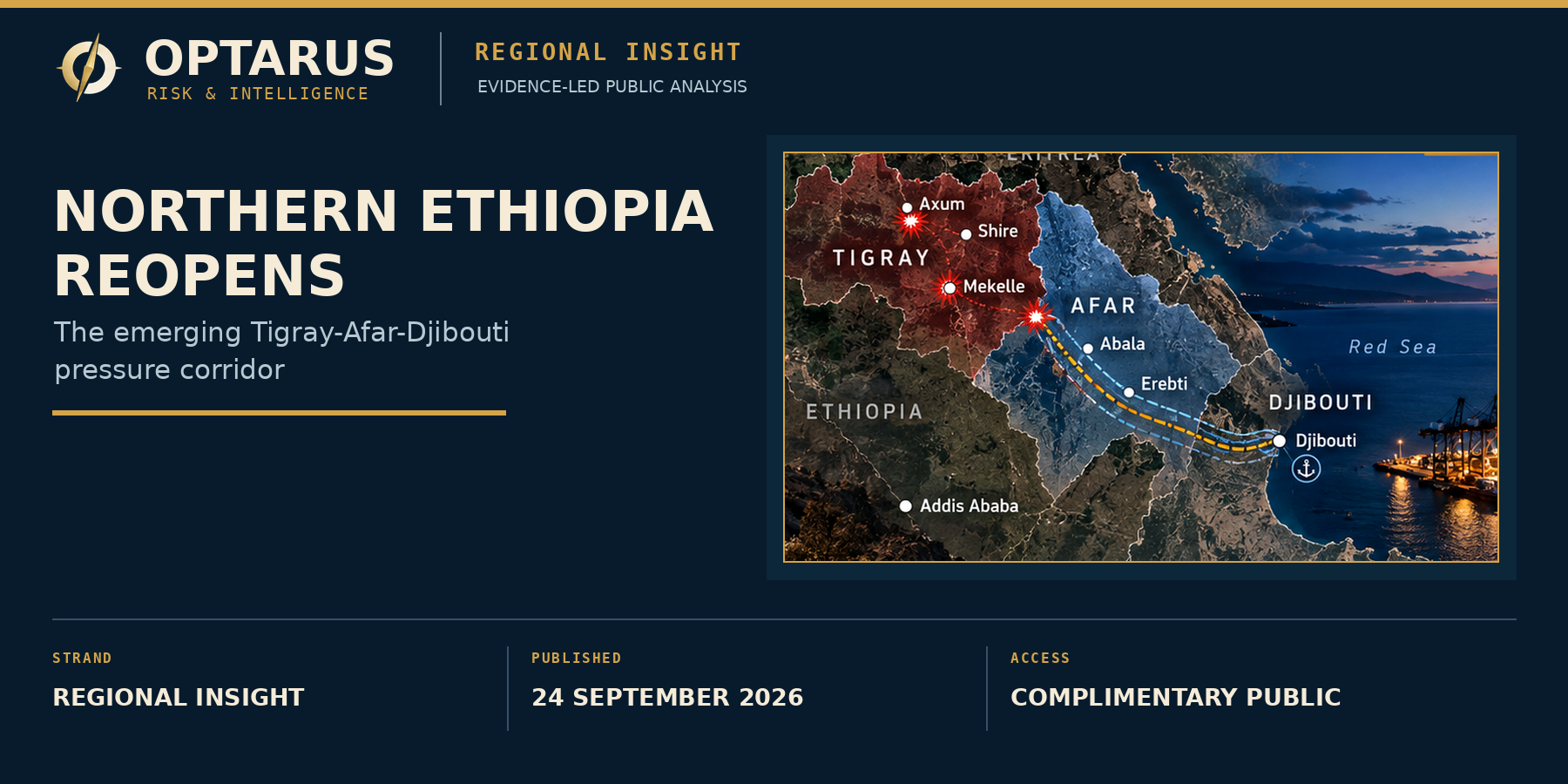
The Emerging Tigray–Afar–Djibouti Pressure Corridor
Renewed conflict is concentrated in Tigray and adjacent areas. Afar now forms the key transmission geography to monitor, while disruption to the Ethiopia–Djibouti commercial corridor is not currently established.
Free to read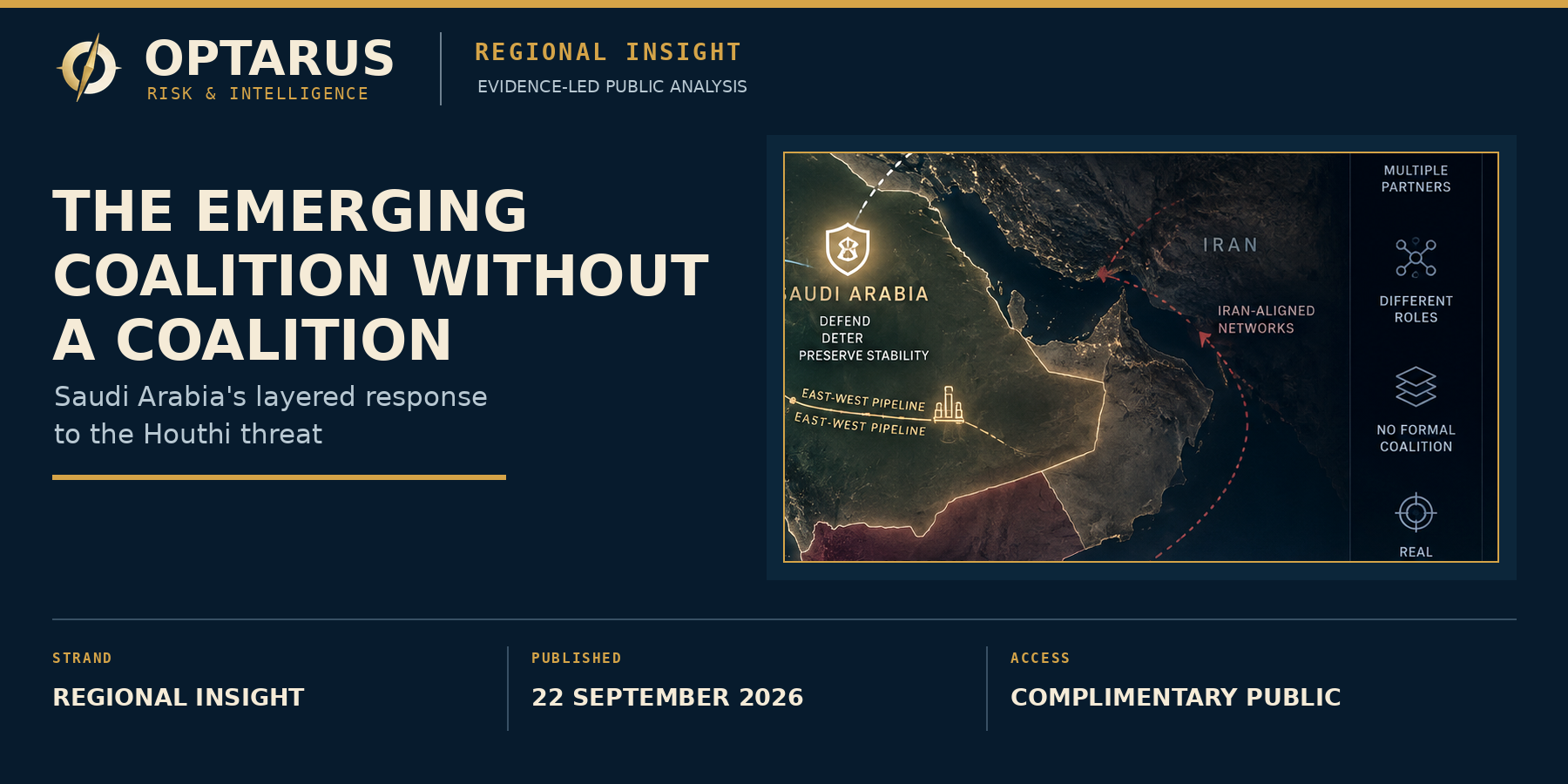
Saudi Arabia’s Layered Response to the Houthi Threat
Saudi Arabia’s response is developing through several external support relationships without a formally declared coalition, creating a layered defensive architecture whose durability and deterrent effect remain the key questions.
Free to readFree public analysis of humanitarian operating conditions, access, logistics, displacement pressure and essential support systems.
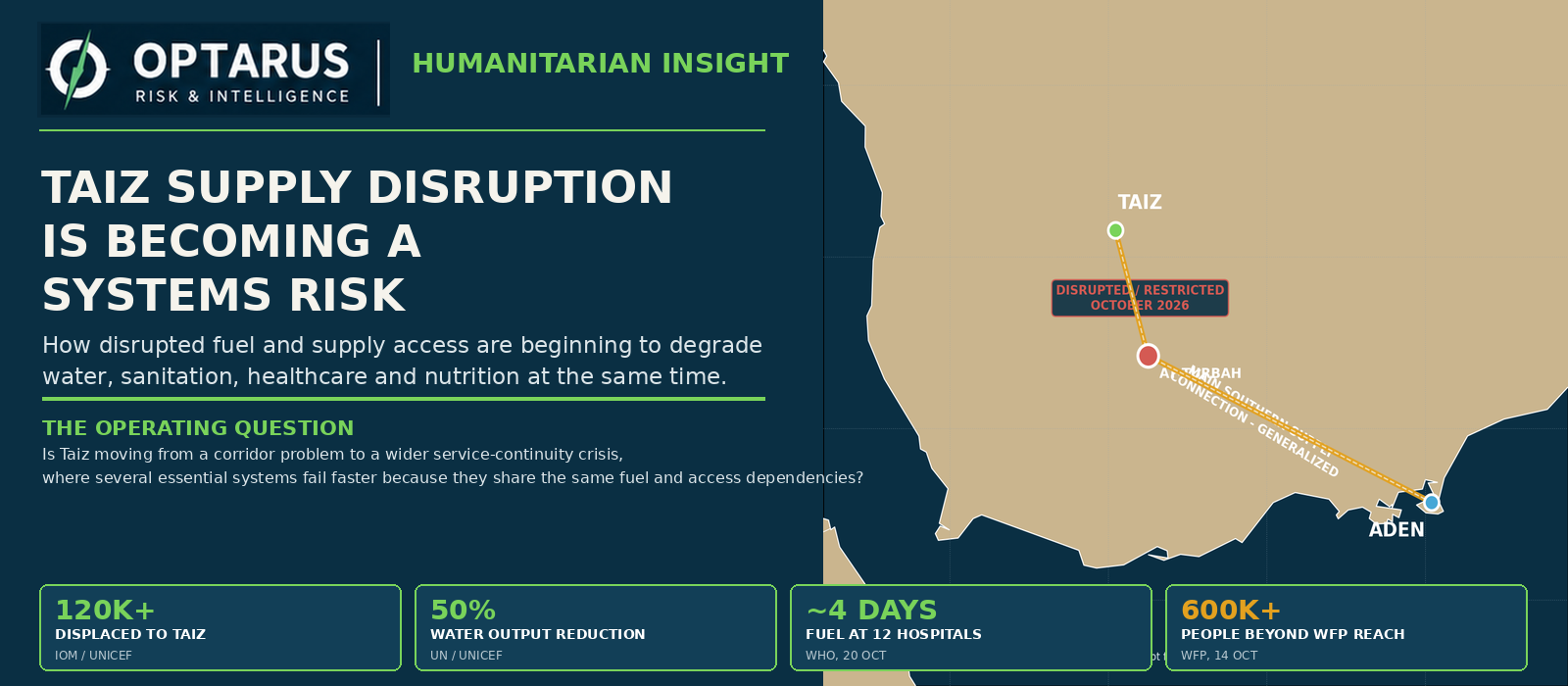
Disrupted fuel and supply access are no longer only a transport problem
This Humanitarian Insight examines how disruption to the Taiz–Aden supply corridor is beginning to affect several essential services at the same time. Fuel and supply constraints are now affecting water pumping, waste collection, hospitals, food support and nutrition programmes, increasing the risk that several already-fragile systems deteriorate together.
Complimentary public assessment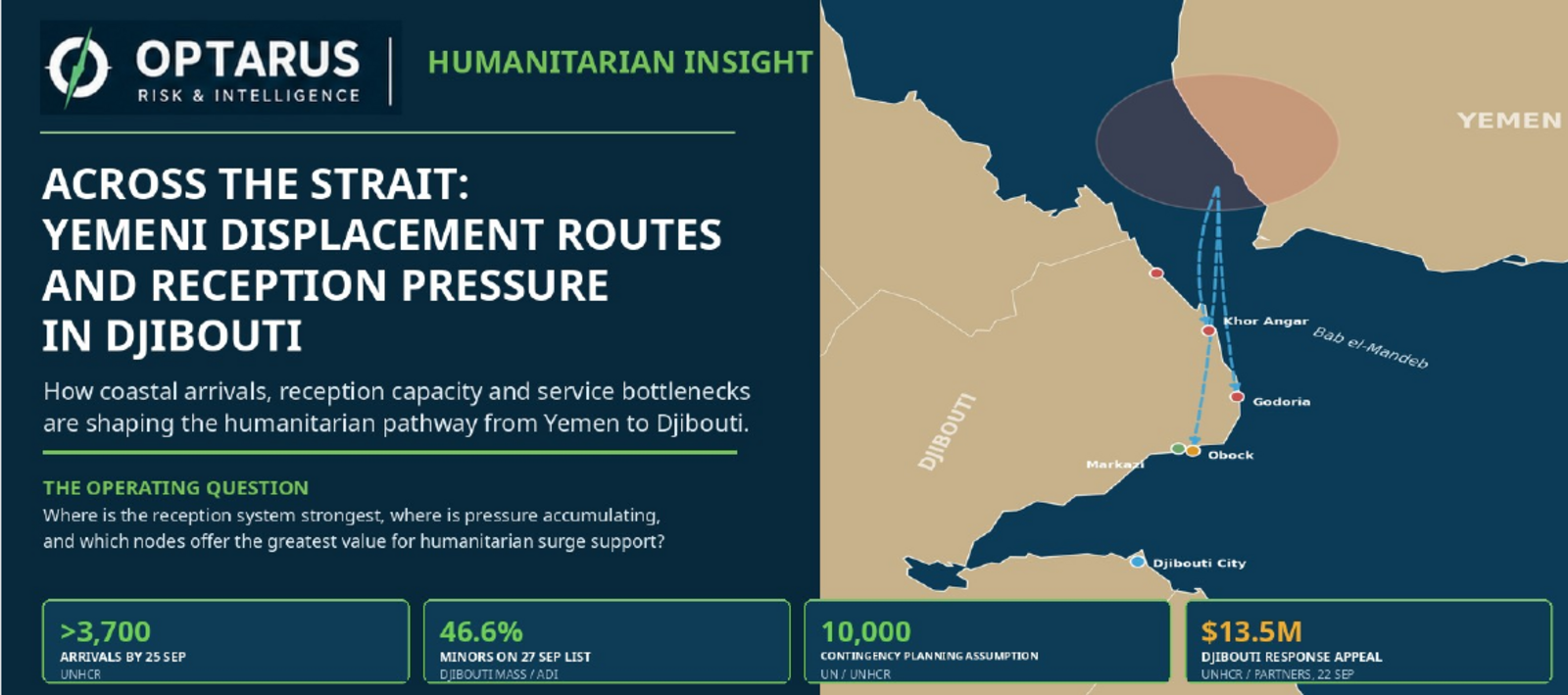
How coastal arrivals, reception capacity and service bottlenecks are shaping the humanitarian pathway from Yemen to Djibouti
This Humanitarian Insight maps the displacement and reception system linking Yemen’s western coast with northern Djibouti. It examines coastal arrival points, the Obock–Markazi reception chain, host-community pressure, health referral, transport, shelter, WASH and service capacity to identify where humanitarian pressure is accumulating and where additional support may have the greatest effect.
Complimentary public assessment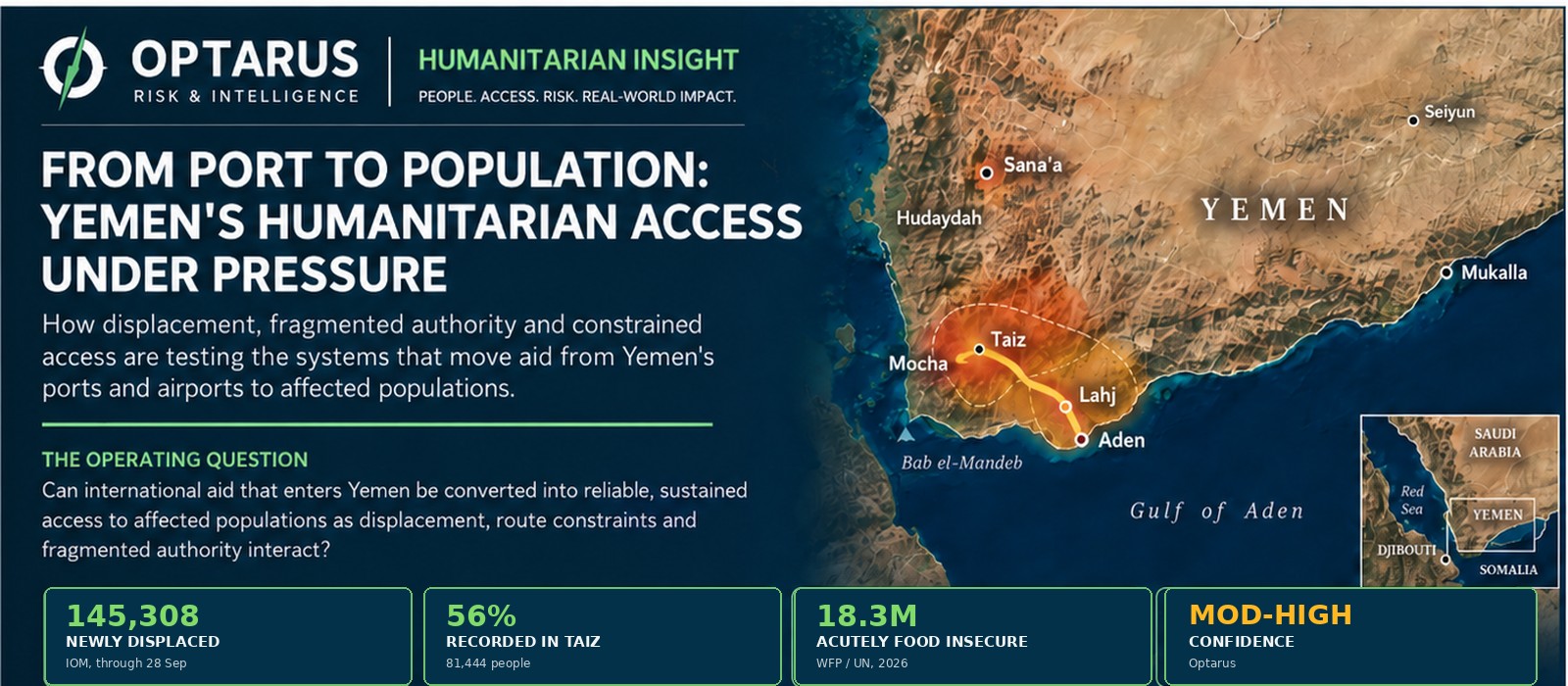
How displacement, fragmented authority, difficult terrain and constrained access are affecting the systems that move humanitarian assistance from Yemen’s ports and airports to affected populations.
Free public assessment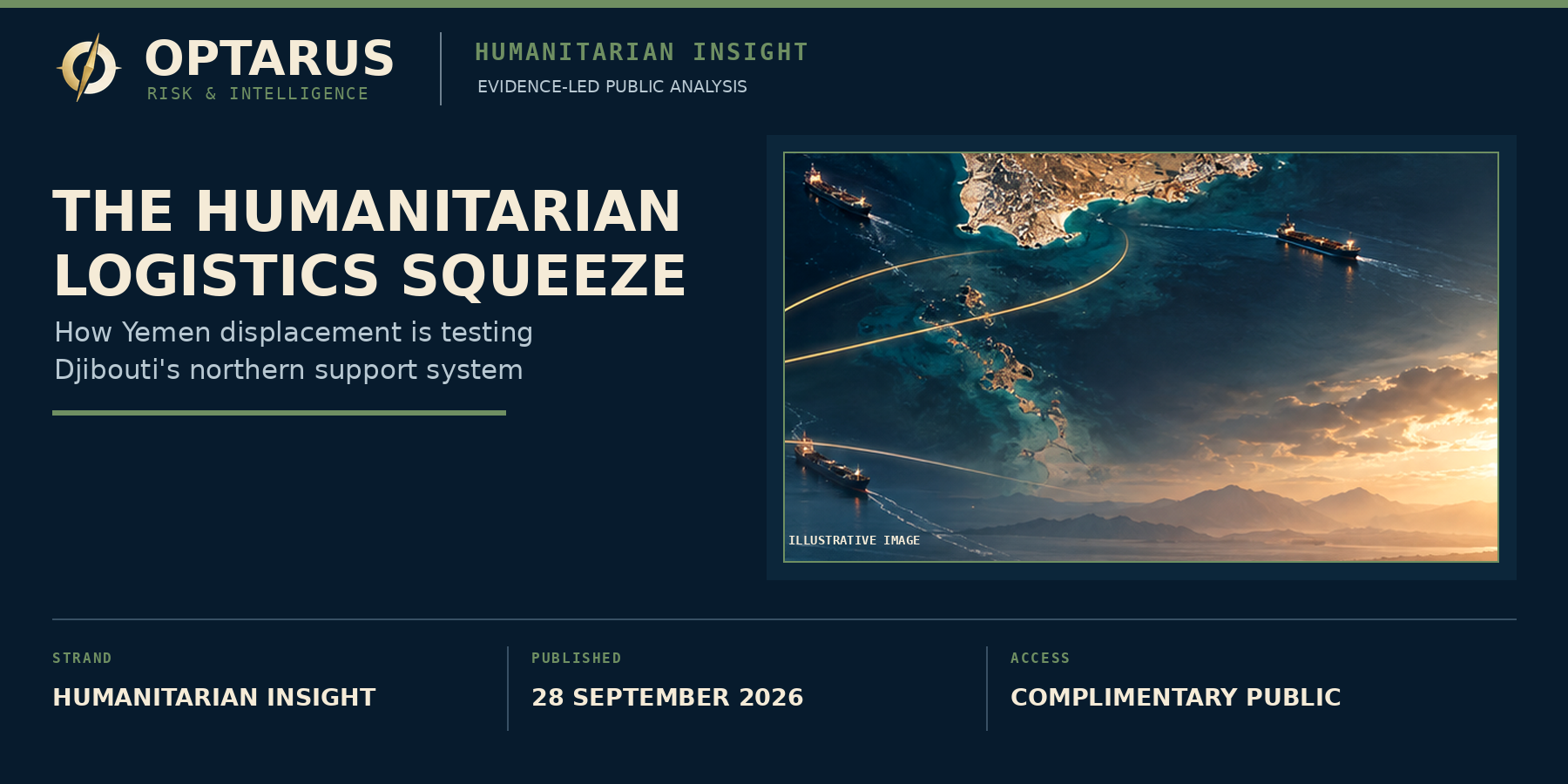
How Yemen Displacement Is Testing Djibouti’s Northern Support System
Yemen-driven displacement is placing observable pressure on northern Djibouti’s reception and support system. Optarus examines how humanitarian demand could begin interacting with transport, fuel, medical, accommodation, security-support and Ethiopia–Djibouti corridor capacity.
Free to read