
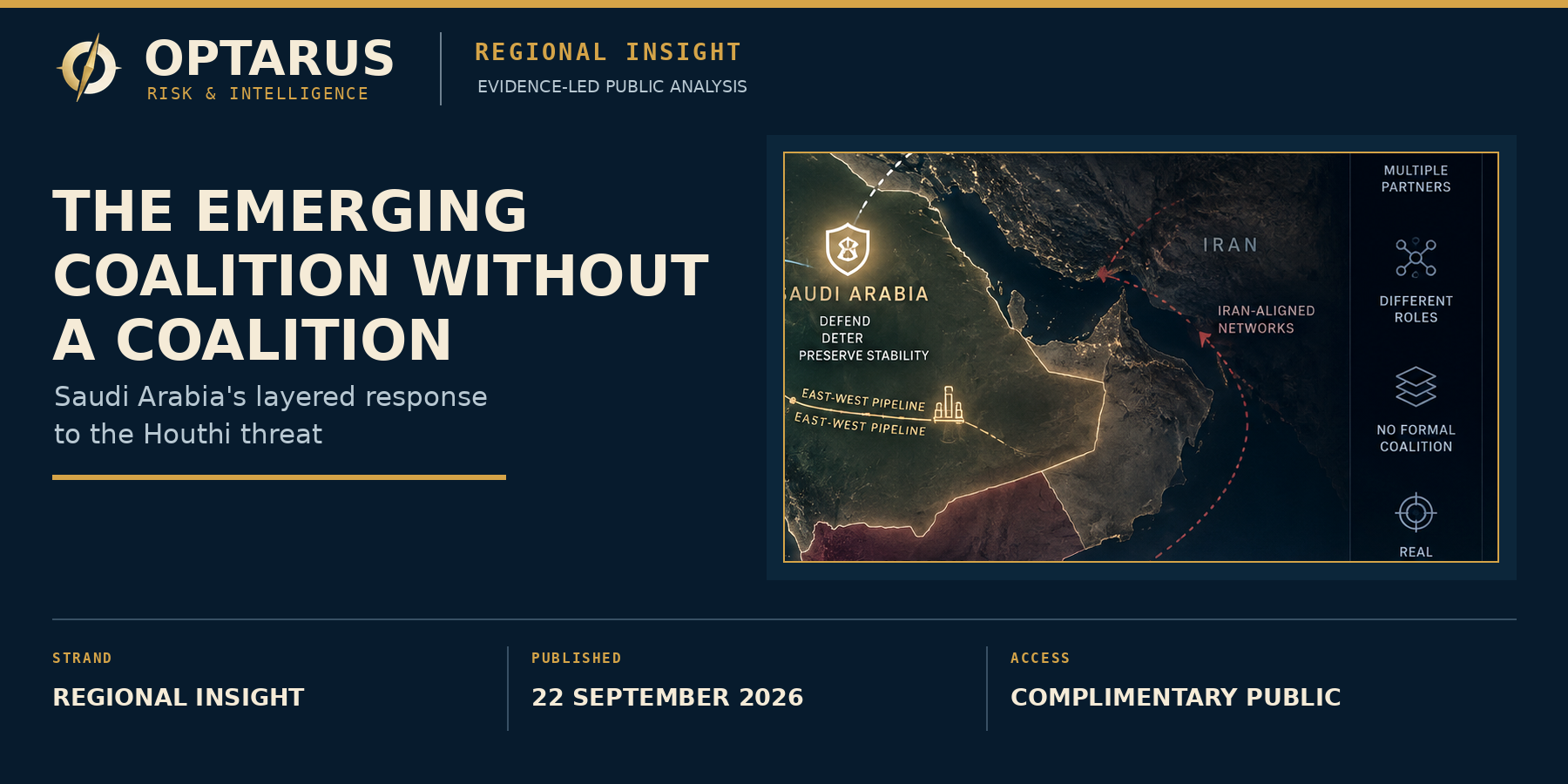
Saudi Arabia appears to be assembling a layered defensive architecture through several external support relationships without a formally declared coalition.
The pattern combines distinct roles rather than a single unified command: UK aerial-refuelling support, French support connected to protection of Yanbu and East-West Pipeline infrastructure, and reported Israeli intelligence support through CENTCOM channels. The evidence does not establish a formal multinational coalition or confirm that every reported element is operationally integrated.
Why the distinction matters
A coalition normally implies an acknowledged political framework, defined command relationships and an agreed operational purpose. The emerging Saudi response is different: bilateral and indirect support arrangements can strengthen defence, deterrence and infrastructure resilience while allowing participants to limit the scope and visibility of their involvement.
The key question is whether several separate support relationships can produce durable collective effect without a formal coalition structure.
Commercial and regional relevance
The defensive architecture matters beyond Saudi territorial protection. Yanbu and the East-West Pipeline are central to maintaining Red Sea export options when Gulf routes are under pressure. The effectiveness and limits of external support therefore affect energy resilience, shipping exposure and the credibility of alternative routing through the Red Sea.
Evidence boundary
Indicators to watch
- Formal statements defining the scope, duration or rules governing external defensive support.
- Evidence of shared command, targeting, intelligence fusion or coordinated air-defence procedures.
- Changes in protection around Yanbu, the East-West Pipeline and Red Sea export infrastructure.
- Further Houthi statements or attacks that broaden or narrow the Saudi-linked target profile.
- Observable changes in shipping, insurance or energy-export behaviour linked to confidence in the defensive architecture.
Methodology and safeguards
This artwork-led Regional Insight distinguishes publicly confirmed support from attributed reporting and analytical inference. It does not treat reported intelligence cooperation as independently verified fact or infer a formal coalition where none has been declared.